


Why Your Belshaw Donut Fryer Isn’t Heating and How to Fix It Quickly
- restaurantequipmen2
- Feb 23
- 5 min read
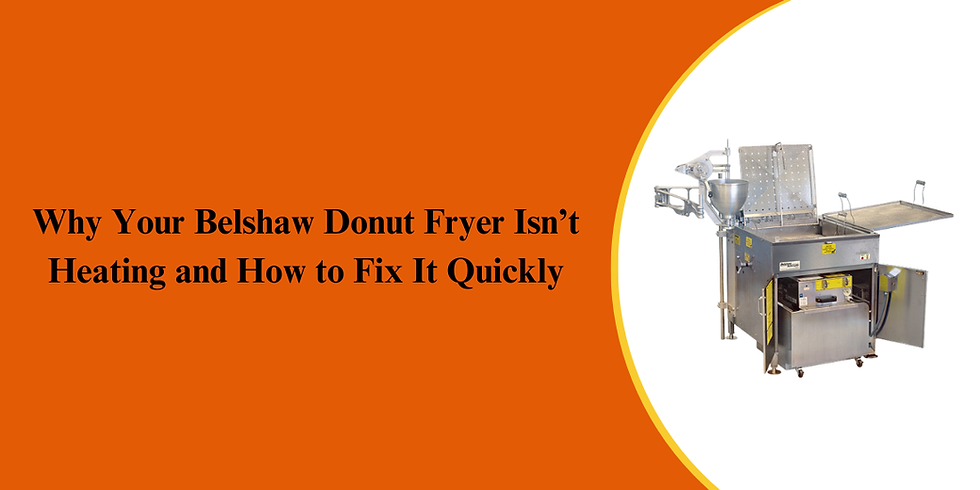
A donut fryer that won’t heat up can bring your bakery production to a halt. Whether you operate a small donut shop or a high-volume commercial bakery, consistent oil temperature is essential for proper texture, color, and cooking time. When your Belshaw donut fryer stops heating, it’s more than an inconvenience—it’s lost revenue and delayed service.
Understanding the most common causes and applying proper Belshaw donut fryer troubleshooting techniques can help you restore performance quickly. In many cases, the solution involves inspecting or replacing worn Belshaw donut fryer parts, ensuring electrical or gas systems are functioning properly, and recalibrating controls.
This guide walks you through the primary causes, step-by-step fixes, recalibration instructions, and preventive maintenance strategies to keep your fryer operating efficiently.
Common Causes of a Belshaw Donut Fryer Not Heating
When your fryer fails to heat, the issue typically falls into one of four categories: electrical failure, gas supply problems (for gas models), safety limit activation, or control system malfunction. Identifying the category is the first step in effective Belshaw donut fryer troubleshooting.
Tripped High-Limit Thermostat
The high-limit switch is a built-in safety feature designed to shut off power or gas flow if oil temperature exceeds safe limits. If triggered, the fryer will not heat until manually reset.
Common triggers include:
Overheating due to thermostat failure
Running the fryer without enough oil
Poor oil circulation
If the high limit repeatedly trips, you may need to replace specific Belshaw fryer parts such as thermostats or sensors.
Faulty Heating Element (Electric Models)
Electric Belshaw fryers rely on heating elements immersed in oil. Over time, elements can burn out due to wear, overheating, or oil contamination.
Signs of a failed element include:
No heat at all
Partial heating
Breaker tripping when the fryer turns on
Damaged elements must be replaced with compatible Belshaw donut fryer parts to ensure safe operation.
Ignition or Burner Issues (Gas Models)
Gas fryers depend on ignition components and burner assemblies. If the pilot light won’t stay lit or the burner fails to ignite, the fryer will not heat.
Common causes:
Dirty burner ports
Faulty thermocouple
Defective ignition module
Gas supply interruptions
Replacing worn Belshaw parts restores reliable ignition performance.
Malfunctioning Thermostat or Temperature Probe
If the thermostat fails to send accurate temperature readings, the heating system may never activate. A faulty temperature probe can misread oil temperature and prevent heating cycles.
Thermostat issues are a frequent cause of inconsistent heating and often require professional Belshaw donut fryer troubleshooting.
Electrical Supply Problems
Loose wiring, blown fuses, or tripped breakers can cut power to the fryer. Electrical damage may occur from heat exposure or oil infiltration.
Inspecting wiring connections and replacing damaged Belshaw fryer parts can resolve many heating issues.
Control Board Failure
Modern models feature electronic control boards. If the board fails, it may not send power to heating elements or gas valves. In such cases, replacing control-related Belshaw donut fryer parts is necessary.
Step-by-Step Fixes for a Non-Heating Donut Fryer
Once you identify the likely cause, follow these structured repair steps to restore heating performance safely.
Step 1: Turn Off and Disconnect Power
Before beginning any repair:
Switch off the fryer
Disconnect from electrical supply or shut off gas
Allow oil to cool completely
Safety is critical during Belshaw donut fryer troubleshooting.
Step 2: Check and Reset the High-Limit Switch
Locate the high-limit reset button (usually behind a panel). Press firmly to reset.
If the fryer heats normally afterward, monitor for repeated trips. Recurring resets may indicate failing Belshaw parts such as thermostats or heating elements.
Step 3: Inspect Heating Elements (Electric Models)
Remove access panels
Visually inspect for cracks, blisters, or burn marks
Use a multimeter to check continuity
If no continuity is detected, replace the element with genuine Belshaw donut fryer parts.
Step 4: Examine Gas Burner and Ignition (Gas Models)
Check if the pilot light is lit
Clean burner ports
Inspect thermocouple for damage
Ensure gas supply valves are open
Replace faulty components using approved Belshaw fryer parts.
Step 5: Test the Thermostat
Using a multimeter:
Check continuity
Compare readings with manufacturer specifications
If the thermostat does not respond properly, install a new unit from trusted Belshaw parts inventory.
Step 6: Inspect Wiring and Connections
Look for:
Loose terminals
Melted wires
Corrosion
Repair or replace damaged wiring to restore safe power delivery.
Step 7: Replace Faulty Control Board (If Necessary)
If all components test correctly but the fryer still doesn’t heat, the control board may be defective. Replacing electronic Belshaw donut fryer parts should follow manufacturer guidelines.
How to Recalibrate the Temperature Controls on Your Belshaw Fryer
Even after restoring heating, improper calibration can lead to uneven cooking. Recalibrating ensures donuts cook evenly and maintain consistent quality.
Why Calibration Matters
If oil temperature is
Too low → donuts absorb excess oil
Too high → donuts burn externally but remain undercooked inside
Proper calibration enhances product consistency and reduces pressure on Belshaw fryer parts.
Step 1: Use a Reliable Thermometer
Place a calibrated thermometer in the oil. Allow the fryer to reach the set temperature.
Step 2: Compare Readings
If the fryer is set to 375°F but the thermometer reads 350°F or 400°F, adjustment is required.
Step 3: Adjust the Thermostat
On mechanical thermostat models:
Locate the calibration screw
Turn slightly clockwise or counterclockwise
Recheck the temperature.
For digital models:
Enter calibration mode (refer to the manual).
Adjust temperature offset
Calibration is a key part of professional Belshaw donut fryer troubleshooting.
Step 4: Test with a Small Batch
After recalibration:
Fry a small test batch
Evaluate texture and color
Confirm oil maintains steady temperature
Regular calibration protects heating elements and other Belshaw donut fryer parts from overworking.
Tips to Prevent Future Heating Issues in Your Belshaw Donut Fryer
Preventive maintenance significantly reduces downtime and repair costs.
1. Perform Daily Cleaning
Remove food debris
Filter oil regularly
Wipe heating components
Debris buildup can overheat essential Belshaw fryer parts.
2. Maintain Proper Oil Levels
Running the fryer with insufficient oil can trigger high-limit switches and damage heating elements.
3. Schedule Routine Inspections
Inspect:
Heating elements
Thermostats
Gas burners
Electrical wiring
Replacing aging Belshaw parts before failure prevents unexpected shutdowns.
4. Replace Worn Components Promptly
If you notice inconsistent heating or longer preheat times, address the issue immediately. Delaying repairs may cause further damage to related Belshaw donut fryer parts.
5. Keep Burner Assemblies Clean (Gas Models)
Blocked burner ports restrict flame distribution, leading to uneven heating and damage on internal systems.
6. Avoid Overloading the Fryer
Overcrowding donuts causes temperature drops and forces heating systems to work harder.
7. Use Genuine Replacement Parts
Using genuine Belshaw fryer parts ensures proper fit, safety compliance, and reliable performance.
8. Train Staff on Proper Operation
Improper startup or shutdown procedures can damage heating components. Ensure staff understands correct operating guidelines.
Conclusion: Restore Heat and Keep Production Flowing
A non-heating fryer can disrupt your entire bakery operation, but most issues can be resolved with structured Belshaw donut fryer troubleshooting and timely replacement of worn components. From tripped high-limit switches and faulty heating elements to thermostat miscalibration and ignition problems, identifying the root cause quickly is essential.
By investing in quality Belshaw donut fryer parts, maintaining proper oil levels, recalibrating temperature controls, and performing routine inspections, you can extend the lifespan of critical Belshaw fryer parts and minimize costly downtime.
Consistent maintenance and prompt repairs ensure your fryer maintains accurate temperature control—so every batch of donuts comes out golden, evenly cooked, and ready to serve.
PartsFe, your trusted source to buy commercial kitchen parts, offers top-quality parts for dishwasher, fryer, and griddle equipment from leading brands—delivering fast to keep your commercial kitchen running smoothly at the best prices in the market.



Comments